
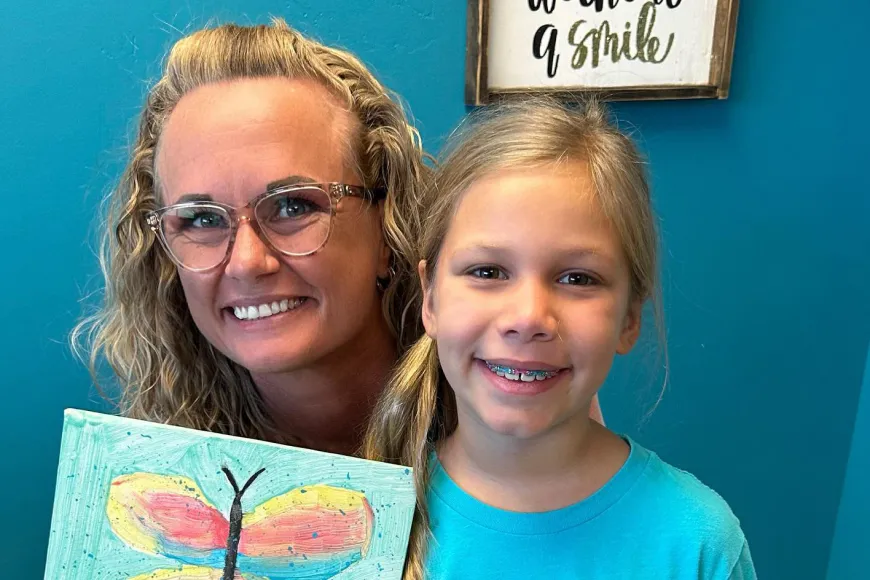
Two-phase orthodontic treatment is a two-stage approach to straightening teeth and correcting bite issues during childhood and adolescence. Phase one typically begins between ages 6-10 to guide jaw growth, followed by a resting period, then phase two with full braces or Invisalign once permanent teeth have erupted. This method works with your child's natural growth patterns to deliver lasting alignment, proper function, and balanced facial development that sets up a lifetime of confident smiles.
Our doctors evaluate each child individually to determine whether two-phase treatment will give them the best results. Not every child needs this approach, but for those who do, early action can make a real difference. Families across our communities often ask whether their child is a good fit, and the honest answer depends on what we see during a hands-on evaluation.
How Two-Phase Treatment Works
Two-phase treatment works in three stages: phase one guides jaw growth (ages 6-10), a resting period allows permanent teeth to erupt, then phase two aligns all teeth with braces or Invisalign. Our experienced doctors guide every treatment decision based on each child's stage of development, ensuring families get clear answers at each step.
What Happens During Phase One?
Phase one focuses on guiding jaw growth and creating space for permanent teeth. During this stage, your child may wear:
- Palatal expanders to widen a narrow upper jaw
- Partial braces on select teeth
- Functional appliances to correct bite relationships
- Space maintainers to hold room for incoming teeth
This phase typically lasts 6-18 months . The focus isn't on perfecting tooth alignment yet. Instead, we're addressing the foundation: jaw size, bite position, and spacing issues that are easier to correct while bones are still developing.
What Is the Resting Period?
After phase one, your child enters a resting period. We remove active appliances and let the remaining permanent teeth come in naturally. During this time, our team monitors progress with periodic checkups. This stage can last anywhere from a few months to a couple of years, depending on when permanent teeth erupt.
What Happens in Phase Two?
Once all permanent teeth are in place, phase two begins. This is the stage where full braces or Invisalign align every tooth into its ideal position. Because phase one addressed the bigger structural issues, phase two is often shorter and more straightforward.
The total timeline across both phases typically spans 2-4 years , though active treatment time is usually less than that combined.
Benefits of Early Two-Phase Treatment
Early intervention can prevent extractions, reduce treatment time later, and shape facial balance during prime growth years. Here are the specific advantages worth knowing.
How Does Early Treatment Help Skeletal Growth?
A child's jaw bones are still developing and respond well to orthodontic guidance. Correcting crossbites, underbites, or narrow palates is simpler when we can work with natural growth, rather than waiting until those bones have fully fused.
Can Early Treatment Help Avoid Extractions or Surgery?
Early intervention often eliminates the need for tooth extractions or jaw surgery later. Creating space during phase one means permanent teeth have room to erupt properly.
What About Facial Balance and Profile?
Two-phase treatment influences how your child's face develops. Proper jaw alignment leads to better facial symmetry and a more balanced profile.
Does Early Treatment Protect Teeth from Injury?
Protruding front teeth are more vulnerable to injury during sports and play. Phase one can bring these teeth back into a safer position.
Two more benefits round out the picture. Confidence during school years matters too: kids notice their smiles, and addressing obvious orthodontic issues early can boost self-esteem during formative social years. And phase two tends to be simpler. Since phase one handles the structural work, the second phase focuses purely on fine-tuning alignment, which often means shorter treatment time and better final results.
Two-Phase vs. Single-Phase Treatment: Which Is Right for Your Child?
Not every child needs two phases of treatment. Here's how the approaches compare:
| Factor | Single-Phase Treatment | Two-Phase Treatment |
|---|---|---|
| Timing | One round of braces in early teens | Early intervention (ages 6-10) plus teen treatment |
| Best for | Mild-to-moderate alignment issues | Severe crowding, crossbites, skeletal discrepancies |
| Jaw correction | Limited (jaw growth mostly complete) | Significant (works with active jaw development) |
| Treatment complexity | Standard | More involved, but often better outcomes for complex cases |
| Total time in treatment | 12-24 months continuous | Spread across both phases with rest period between |
Single-phase treatment works well when alignment is the main concern and jaw development is on track. Two-phase treatment becomes the better choice when skeletal issues, severe crowding, or significant bite problems need early attention.
The only way to know which approach fits your child is a professional evaluation. Our doctors assess jaw development, tooth eruption patterns, and bite relationships to recommend the right path forward.
Cost Factors for Two-Phase Treatment
Several elements influence the investment in two-phase orthodontic care:
- Complexity of issues being corrected: More severe skeletal or bite issues require more involved treatment
- Phase one appliances: Expanders, partial braces, and functional devices vary in cost
- Phase two treatment choice: Metal braces, clear braces, and Invisalign have different price points
- Length of active treatment: Longer phases mean more appointments and adjustments
- Insurance coverage: Many orthodontic plans cover a portion of treatment, though lifetime maximums apply
Every child deserves the care they need, which is why our practice offers low monthly payment options and a payment calculator on our website. During your free consult, we'll break down costs clearly and discuss what your insurance covers.
Is Your Child a Candidate for Two-Phase Treatment?
According to the American Association of Orthodontists, children should have their first orthodontic evaluation by age 7. This doesn't mean treatment starts then for everyone. But it gives our doctors the chance to spot developing issues early.
Signs your child may benefit from two-phase treatment:
- Early or late loss of baby teeth
- Difficulty biting or chewing food
- Mouth breathing or snoring
- Thumb sucking past age 5
- Crowded, misplaced, or blocked-out teeth
- Teeth that don't meet properly when biting
- Jaws that shift or make sounds
- Protruding front teeth
What happens at the evaluation?
Our doctors examine your child's teeth, jaw, and bite. We may take X-rays to see developing teeth below the gum line. From there, we'll explain whether early treatment makes sense or if monitoring growth is the better approach.
Many children who come in at age 7 don't need immediate treatment. We simply keep an eye on their development and recommend phase one only when it will genuinely benefit them.
Frequently Asked Questions About Two-Phase Treatment
At what age should two-phase treatment begin?
Phase one typically starts between ages 6-10, when baby teeth and permanent teeth are both present. The ideal timing depends on your child's specific issues and development stage. An evaluation by age 7 helps determine the right starting point.
What happens if early treatment is delayed?
Delaying treatment when it's truly needed can mean missed opportunities. Jaw bones become less responsive to orthodontic guidance as children age. Issues that could have been corrected with appliances may require extractions or surgery later. However, not every child needs early intervention, so a professional evaluation is key.
How long is the resting period between phases?
The resting period varies based on when permanent teeth erupt. For most children, this spans 1-3 years . During this time, the team at Macdonald Orthodontics monitors progress with periodic checkups to ensure teeth are coming in as expected.
Will my child still need braces after phase one?
In most cases, yes. Phase one addresses jaw and spacing issues, but full alignment of permanent teeth happens in phase two. The good news is that phase two is often shorter and simpler because the foundation work is done.
Does insurance cover two-phase orthodontic treatment?
Many dental insurance plans include orthodontic benefits that apply to two-phase treatment. Coverage varies by plan, and lifetime maximums typically apply across both phases. Our team at Macdonald Orthodontics helps you understand your benefits and maximize your coverage during your free consult.
Can phase two be done with Invisalign instead of braces?
Yes. Once your child has all their permanent teeth, Invisalign is often a great option for phase two. Clear aligners work well for teens who want a more discreet look. Our doctors will discuss whether Invisalign fits your child's specific needs.
Every child's smile tells a different story. Understanding two-phase treatment helps families make informed decisions about when, why, and how to start care. Because everyone deserves to live life smiling!